

| Width | Any Custom Size, 36" |
|---|
Appliques & Onlays MOD002
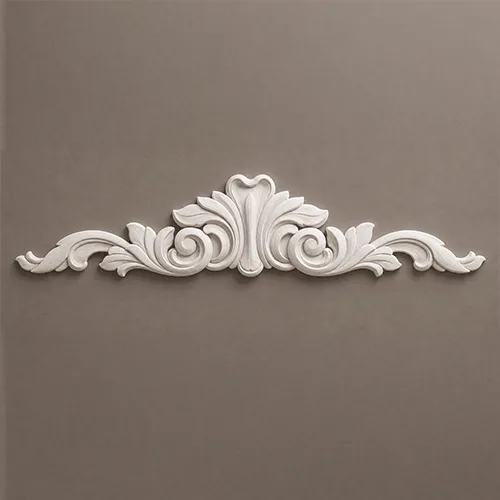
Appliques & Onlays MOD002
Lightweight decorative appliques for window and door crossheads, sills, fence panels and ceilings. Made to order in any size, for interior and exterior use.
from
$375.00
- Specifications
- Description
- Cad drawings
- Reviews (0)
- Application
- Installation and documents
- Customization
- Payment
- Exchange and return
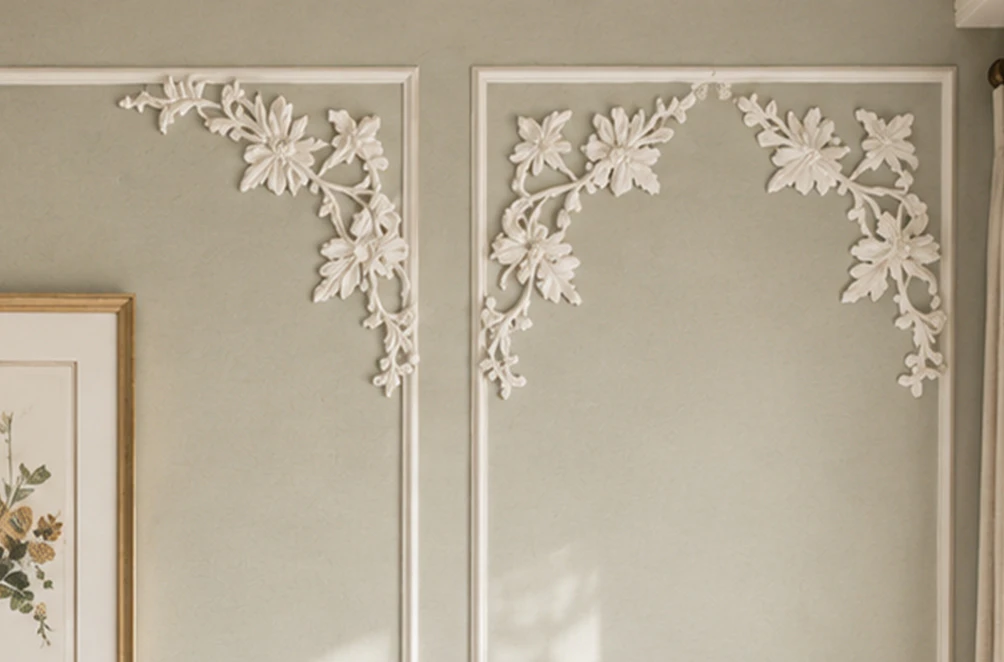
Our appliques and onlays add hand-carved character to plain surfaces. Use them as head pieces over window and door crossheads, as decorative aprons under window sills, or as accents on fence panels, crown moldings and coffered ceilings. Each piece is CNC-cut from EPS foam or high-density polyurethane, so it is light, easy to install and won’t rot, crack or attract pests.
Cad drawings
Appliques and onlays are made to a dimensioned drawing. Send us the size of the wall, ceiling, door or furniture panel, with a photo, and we draw the motif and its outline, with the relief and the fixing points marked. Plaster wall plaques and panel centers are shown at scale so you can check the placement. You approve the drawing and finish before any foam is cut. If your designer needs a repeat pattern across several panels, mention it in the brief.
Application
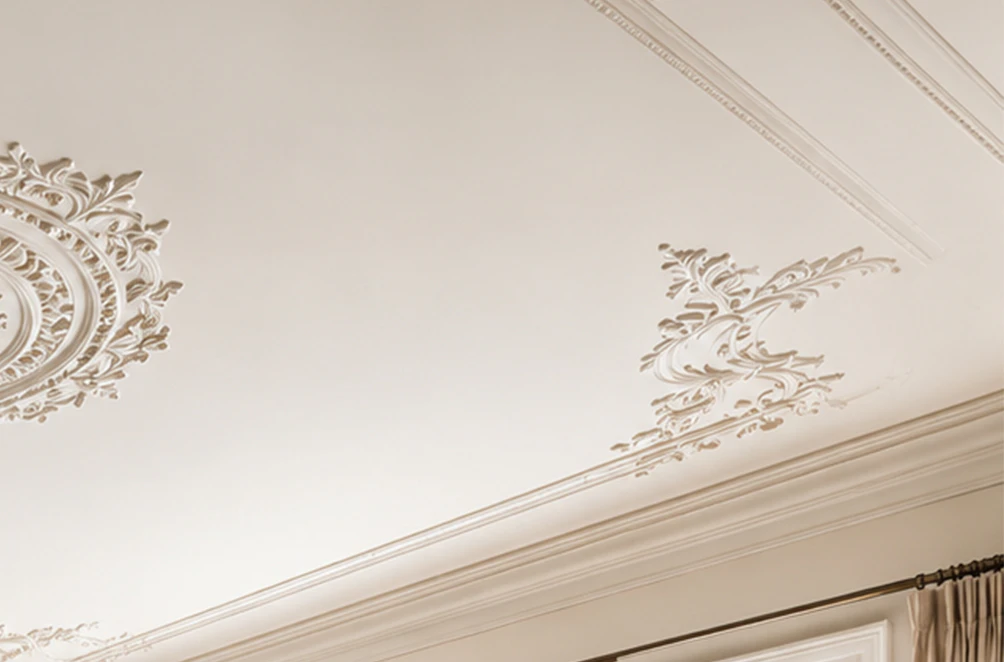
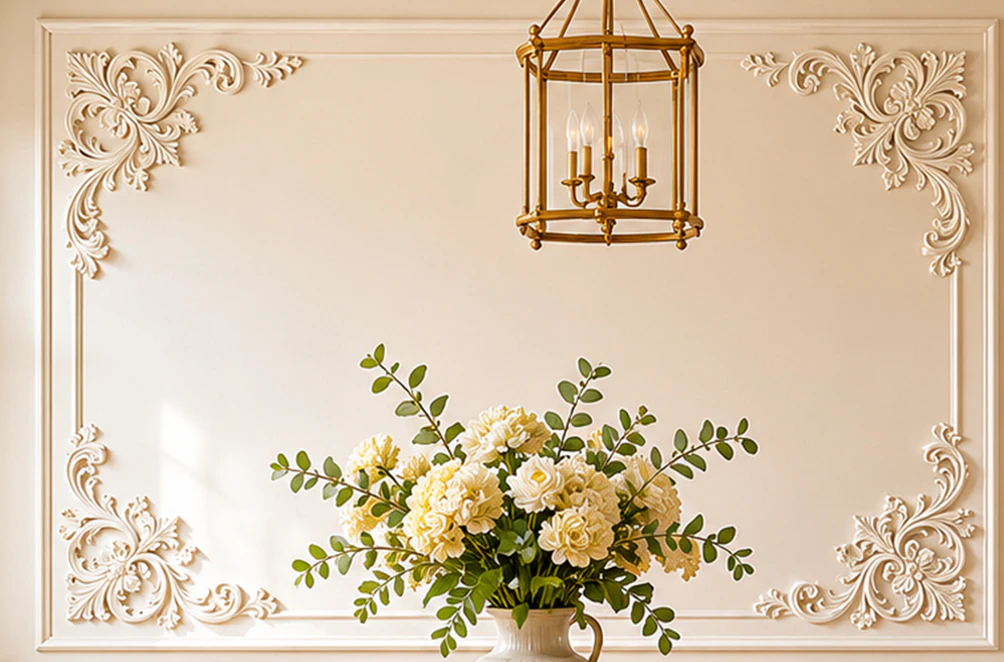
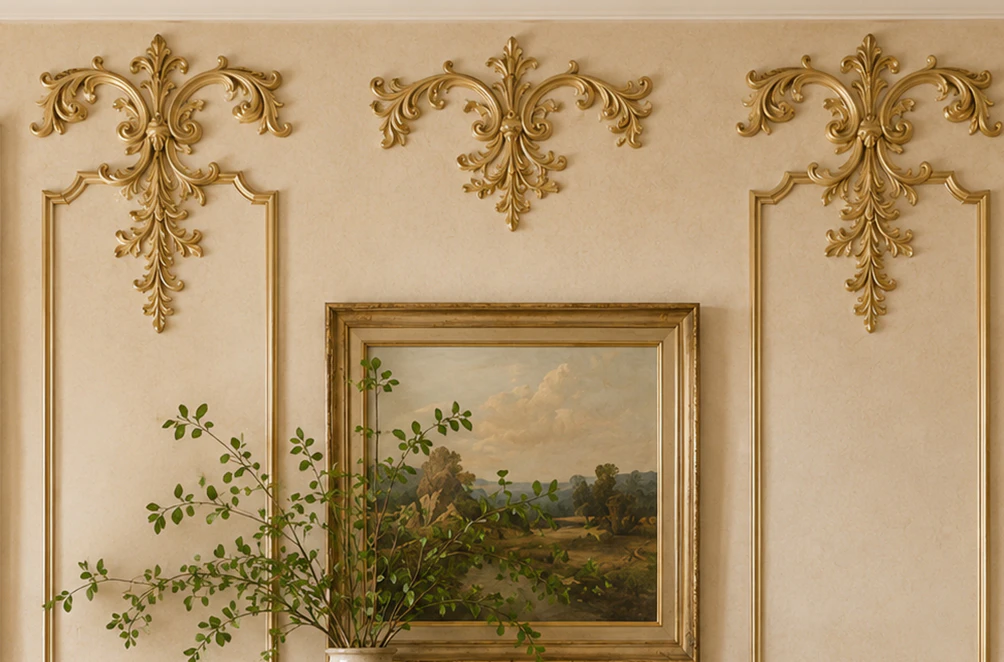
Appliques and onlays decorate walls, ceilings, cabinet doors, fireplaces, headboards and furniture fronts in homes, hotels, restaurants and shops. They add relief to a flat surface as a plaster wall plaque, a panel center or a piece in the style of traditional wood appliques. Lightweight foam pieces mount on walls and ceilings without heavy fixings, and the same motif can repeat across a whole project.
Installation and documents
Each piece is fixed to a clean, sound surface with adhesive and, where the surface allows, mechanical fasteners. Joints are filled and the piece is painted or finished with a stucco base coat to match the surroundings. An installation guide comes with every order, and the same method suits small jobs such as diy furniture appliques. Surface preparation and local requirements stay with your architect and installer.
Customization
Choose the motif, such as scrolls, florals, shells, medallions or geometric patterns, plus the size, thickness of relief and finish. Finishes include smooth, plaster-look, wood-effect or painted. Wood appliques for cabinet doors can be sized to the panel and made as a matching set. Send a sketch or a photo of the surface with dimensions and we propose a design.
Payment
The price of your applique or onlay depends on the size, relief, quantity and finish. We accept PayPal, Visa and Mastercard. The payment schedule is written in your quote, and production begins after the drawing is approved and the order is confirmed. Freight is quoted with the order, and a larger number of identical pieces on one project lowers the price per piece.
Exchange and return
Every applique and onlay is made to order from your approved drawing, so it cannot be returned or exchanged for a change of mind. Please inspect the shipment on delivery, note any damage on the carrier’s paperwork and photograph it before unpacking. If a piece arrives damaged or does not match the approved drawing, contact us right away and we will repair or remake it. Our products carry a 20-year warranty.
Our project gallery
Similar products
AO-MOD009from
$750.00
AO-MOD003from
$475.00
AO-MOD004from
$750.00
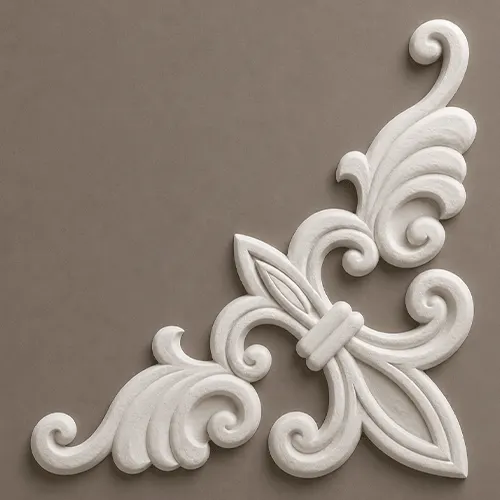
AO-MOD011from
$275.00
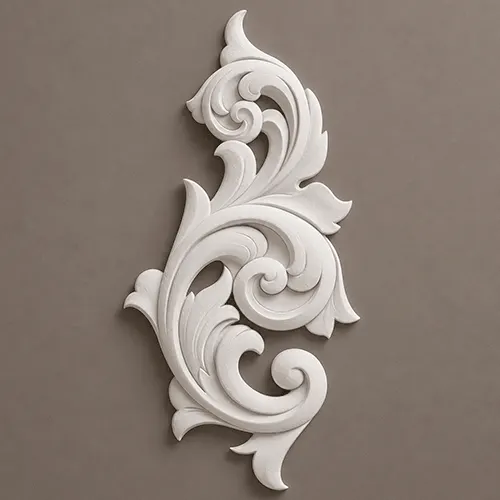
AO-MOD006from
$175.00
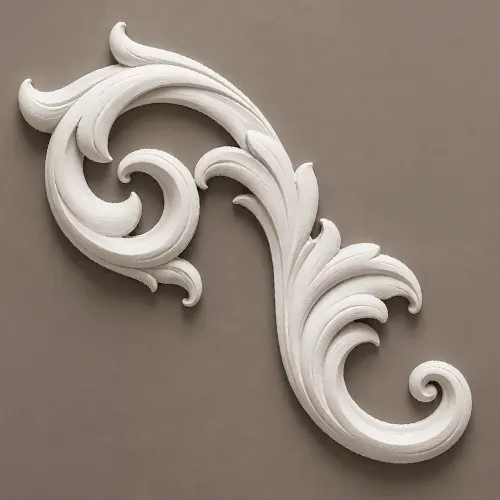
AO-MOD007from
$250.00
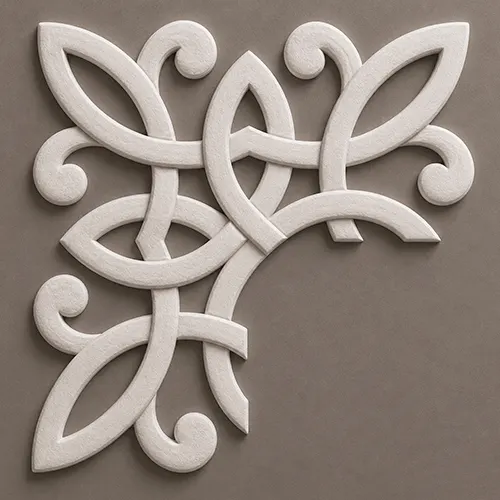
AO-MOD010from
$250.00
AO-MOD005from
$450.00
AO-MOD001from
$750.00
AO-MOD008from
$950.00
AO-MOD012from
$275.00
Client testimonials
From your first idea to the final installation — our process is clear, fast, and designed to make every detail simple.

Replicated missing 19th-century scrollwork on a historic restoration project. Plaster would have taken weeks; these EPS onlays arrived crisp, symmetrical, and ready to paint.
The polyurea hard coat gave these pediment appliques the exact density needed to withstand direct Georgia sun without joint separation or hairline fissures.
We used these custom carved onlays to dress up custom estate entry doors. They bonded instantly with urethane adhesive and took dark stain-matched enamel beautifully.
Standard polyurethane store-bought pieces always crack along the freeze-thaw seam. These elastic-coated shapes have held up through two harsh winters completely intact.
Sent a hand sketch with specific dimensional limits for a client’s fireplace mantel. The CNC rendering matched down to the millimeter.
Incredible weight savings for high gable frieze installations. My crew was able to position large floral medallion appliques without scaffolding pulleys.
FAQ
What is the difference between appliques and onlays?
The terms overlap and are often used interchangeably. Both are decorative elements fixed on top of a flat surface such as a door, wall, cabinet or façade.
What are your appliques made of?
High-density architectural-grade EPS, CNC-cut and covered with polyurea. It looks like carved wood, stone or plaster at a fraction of the weight.
How are they different from polyurethane or plastic appliques from a store?
Retail pieces come in fixed sizes and patterns. Ours are made for your project, with the pattern, scale and finish matched to the architecture.
Can they be used outdoors and indoors?
Yes. The elastic polyurea coating handles thermal movement outdoors, and the same pieces can decorate lobbies, walls, fireplaces and furniture indoors.
How are they installed?
Usually with adhesive and fasteners, depending on the surface. Tell us the substrate and we advise on the method.
Can you copy an existing carved element?
Yes. CNC technology reproduces scrolls, florals and other patterns precisely, which helps when an original element is lost or damaged.
Can appliques be used on cabinet doors and furniture?
Yes, because the pieces are light. Share the door or panel size and the pattern you like.
What warranty and information do you need to quote?
The structure and coating are covered by a 20-year warranty. For a quote, send drawings or photos, approximate dimensions, quantity and indoor or outdoor use.
Let's build something great together
Have a project in mind?
Our dedicated specialists are ready to collaborate with you, turning your concept into a detailed plan with a transparent budget. Let’s bring your vision to life!
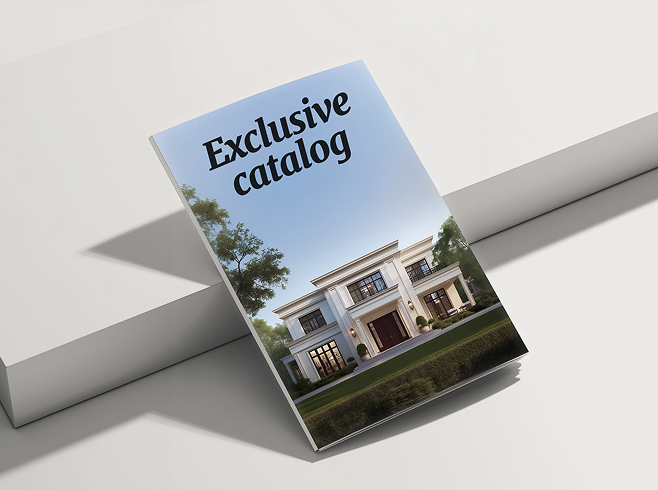
Your essential design
& specification catalogDownload Free Catalog
& specification catalog
Get the definitive guide to our custom decorative architectural foam shapes. This free catalog is packed with hundreds of design profiles, detailed technical specifications, and real-world project applications.
More architectural shapes
We provide architects, builders, and homeowners with turnkey decorative elements that transform any project — fast, easy, and cost-effective.
Blog posts
5-minute read
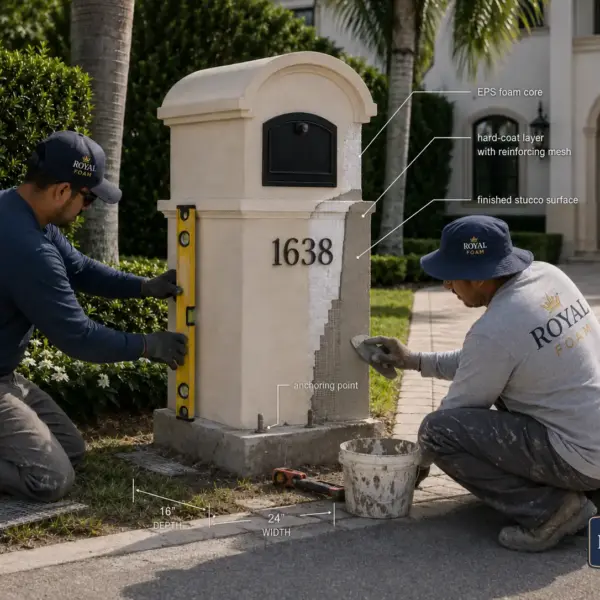
Stucco Mailboxes:
Lightweight Architectural Detail with Masonry-Level Curb Appeal
Traditional masonry mailboxes look solid, but they are heavy, slow to build, and often require more site labor, curing time, and repair work. Modern EPS-based stucco mailboxes offer the same substantial visual effect with less weight, cleaner installation, and wider design freedom.

5-minute read
Decorative Modern Dormer Windows
Decorative Architectural Shapes decorative dormers are designed to bring elegance, depth, and character to any building exterior. A dormer is more than a decorative detail; it is an architectural statement that can transform a plain roofline or window area into a custom, high-end feature.
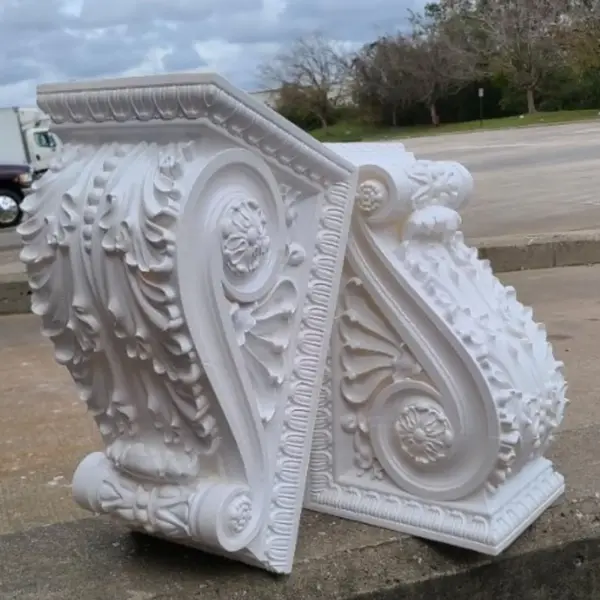
Beauty and quality in the details: appliques & onlays in modern architecture
Appliques and onlays are architectural elements that serve as design accents in interior finishes. They lend a building a sense of completeness and character. In the classical sense, these are decorative details applied to the main facade or an interior element (such as a cornice, fireplace or panel). While they were once carved from solid wood or stone, or cast as heavy plaster wall plaques, today they are crafted from high-tech materials combined with protective coatings.
Why do details make all the difference?
High-quality architecture is always built on the contrast between volumes and detailing. Appliques and onlays allow you to emphasize proportions, highlight entry areas and pediments, or conceal structural joints. Just a few of these elements are enough to disguise technical components, transforming them into decorative accents. Using architectural appliques and onlays is the simplest way to add complexity and uniqueness even to a standard facade, while wall appliques and onlays do the same for commercial lobbies and residential interiors.
However, unlike simple off-the-shelf plastic appliques and onlays from home improvement stores, Decorative Architectural Shapes integrates architectural decor into the overall concept of a specific project. With custom architectural foam as our core focus, we handle the architectural fabrication of each piece for your project. This means that your onlays will perfectly match the building’s style, rather than looking like random glued-on plastic.
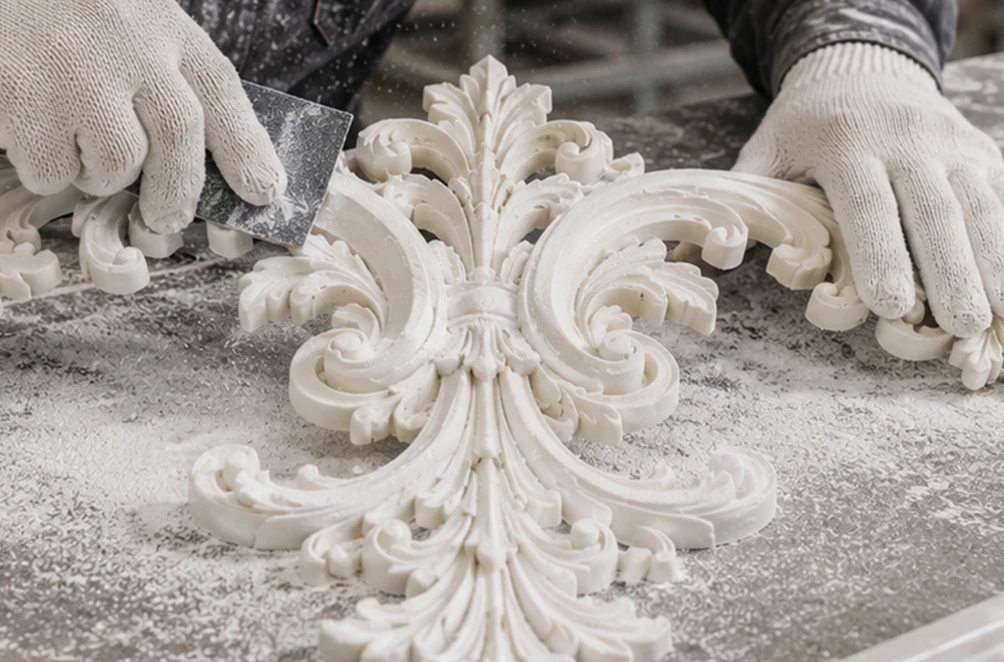
Where custom appliques and onlays work best
Because each element is made for a specific location, the same approach covers very different parts of a building. On the exterior, appliques and onlays are most often placed on the main facade, above entrances, on pediments and along cornices, where one well-proportioned ornament can anchor the whole composition. Symmetrical pairs placed on either side of an entrance make the entry read as the focal point of the facade. Inside, they are used on panels, door casings and fireplace surrounds, as well as in commercial lobbies, where visitors form their first impression of the space.
Historical restoration is another common task. When an original carved element has been lost or damaged, CNC technology allows us to replicate its shape precisely, and the polyurea coating protects the new piece over the long term. This way, an older building gets back its character without inheriting the maintenance problems of the original material.
Our clients include general contractors, architects, interior designers and property owners working on residential and commercial projects. Contractors value predictable installation, architects need the finished element to match the drawing, and owners want decor that keeps its appearance with little upkeep. Interior designers, in turn, look for pieces that can be adapted to a specific room rather than chosen from a catalog.
How decorative elements are engineered
Although our appliques serve a purely decorative purpose, they are essentially engineered products designed for many years of service:
- Core. Made from high-density Architectural Grade EPS. Unlike wood, this material is not susceptible to warping from moisture, which is critical for elements exposed to the outdoor environment. We take advantage of the opportunity to engineer the shape to minimize wind resistance. The core is also lightweight, which makes the elements easy to handle during installation.
- Protective coating. The key to durability is a layer of Premium Architectural Polyurea (60–100 mil). Unlike standard EIFS mesh, which cracks at corners and joints, elastomeric polyurea stretches along with the house. Each coating is applied according to a custom plan based on the purpose of the applique or onlay — such elements cannot be purchased off-the-shelf.
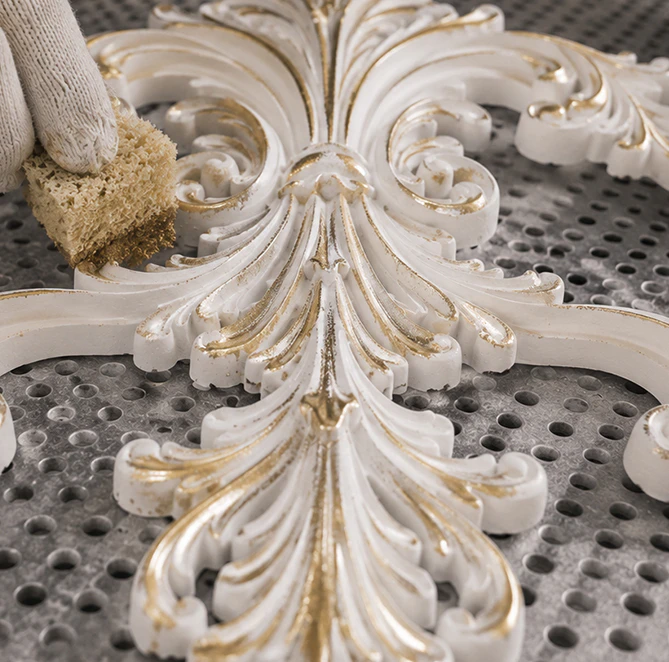
- Finish. We perform manual calibration of complex engineering assemblies, so carved appliques and onlays keep crisp detail. Every line of the bas-relief is refined to perfection.
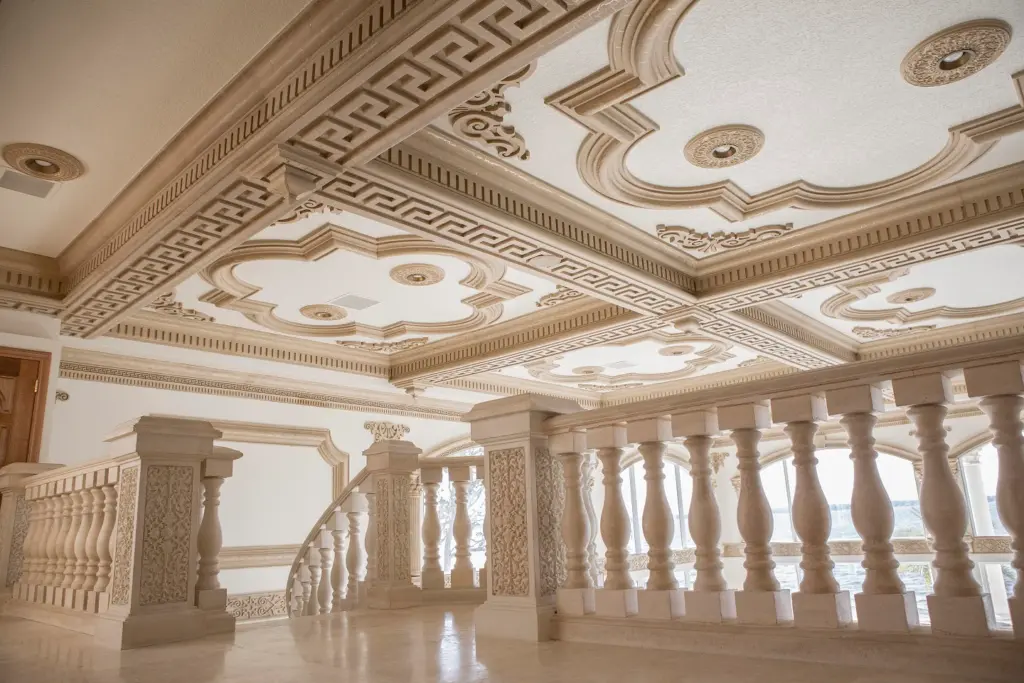
From drawing to finished piece: our architectural fabrication process
Every project starts with the customer’s drawings or sketches. Whether you have a photo of a historical ornament, a detailed architectural drawing or only a concept for a new motif, it becomes the basis for the shape, scale and depth of relief. The design is then cut from EPS with CNC technology, which reproduces scrolls, floral motifs and other carved patterns with consistent accuracy from one piece to the next. The scale is set for the actual surface, so the proportions of the ornament work both up close and from the street.
After shaping, each piece receives its polyurea coating and is finished by hand, so the lines of the bas-relief stay sharp under the protective layer. The result is an element made for one project and one location, not a standard piece trimmed to fit on site. This also makes it easier for Decorative Architectural Shapes to keep appliques and onlays consistent in style with the other decorative elements of the building.
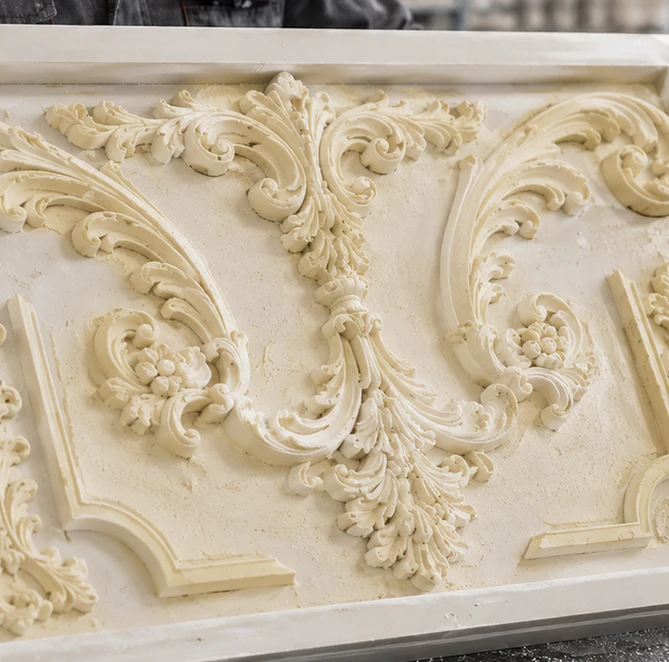
Comparison of solutions: why we are worth considering
Traditional materials have their limitations. Carved wood appliques and onlays require constant treatment to prevent rot and cracking; concrete elements require a massive foundation; and products made of ordinary, brittle foam without a coating break apart at the first impact or when water freezes.
Decorative Architectural Shapes offers a system that combines the best of both worlds: the realistic appearance of natural materials with the durability of polymers. Our solutions reduce the risk of cracking and delamination and provide minimum maintenance for decades to come. The elastic polyurea layer compensates for thermal expansion, so cracks do not form at the joints the way they can in rigid plaster systems. Unlike wood, the coated elements are moisture-resistant and do not require periodic repainting. The structure and coating are covered by a 20-year warranty, and based on our completed projects, the actual service life exceeds 50 years. For contractors, this means lower costs for correcting mistakes; for architects, it’s about precise forms; and for owners, it means aesthetic enjoyment without the hassle of maintenance.
How to choose the right applique or onlay
A few practical points help narrow down the design before you request a quote:
- Scale. Measure the panel, cornice, pediment or opening the element will sit on. An ornament that is too small looks lost on a large facade, while an oversized one can overwhelm a door casing or a fireplace mantel.
- Style. Match the motif to the architecture. Classical scrolls and acanthus leaves are good with traditional facades, while simplified geometric shapes are better suited to contemporary buildings.
- Depth of relief. Deep relief reads well from a distance on an exterior, while shallower detailing is often enough indoors, where the element is seen up close.
- Location. Note whether the piece will be exposed to the weather or installed indoors, and what surface it will be mounted on, so the construction and fastening can be planned in advance.
- References. Drawings, sketches or photos of existing ornaments speed up the design stage and help us reproduce the look you need.
Appliques and onlays for interiors
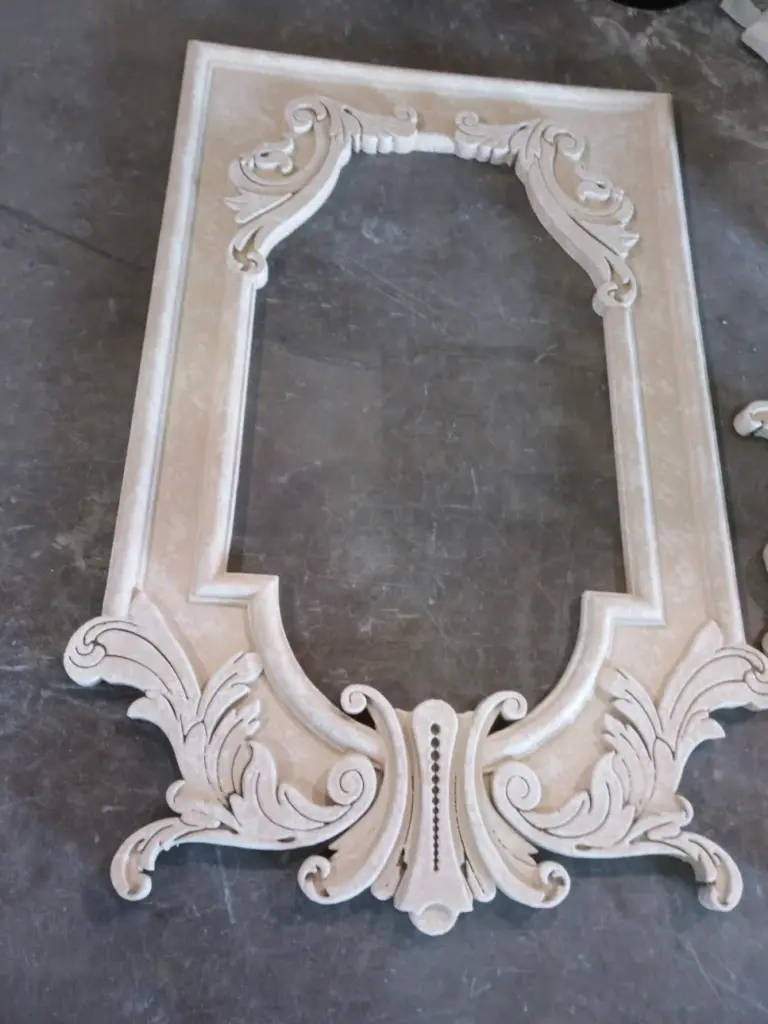
Inside a building, decorative elements are seen at arm’s length, so precise detailing matters even more than on a facade. A carved onlay centered on a fireplace mantel, a pair of appliques on a door casing or a repeating motif across wall panels gives a room a finished, architectural look without major construction work. In a commercial lobby, a custom composition can reflect the company’s brand or repeat a motif from the building’s exterior, connecting the interior with the facade. Because the elements are lightweight and fixed with adhesive and mechanical fasteners, they can be added during a renovation as well as in new construction. The moisture-resistant coating is also useful in entry areas, where interior elements are exposed to changing conditions.
Installation and compatibility
Decorative EPS elements are lightweight and are installed using adhesive and mechanical fasteners, so installation does not turn into a separate construction project. The elements are compatible with facade systems, including EIFS, which means appliques and onlays can become part of an EIFS facade rather than an add-on that fights with it. Lightweight pieces are also easier to position precisely, which helps keep symmetrical compositions aligned on a pediment or above an entrance.

What to send when you request a quote
To prepare an accurate quote, share as much of the following as you have: drawings or sketches of the ornament, photos of the facade or room where it will be installed, approximate dimensions of the surface, the number of elements, and whether they will be used outdoors or indoors. For historical restoration, photos of the surviving original details are especially useful, since they allow the new pieces to be matched to the existing ones. If there are no finished drawings yet, a description of the style and a few reference images are enough to start the conversation, and the design can be developed from there.
Decoration that looks incredibly natural
Our decorative elements don’t just adorn the facade — they also tie the entire design together stylistically. These elements can be crafted as custom compositions designed specifically for each project, including fireplace appliques and onlays, door casing details and entry accents. We can create decorative panels that reflect the location history, the company’s brand, or the owner’s personal preferences. If your project calls for linear ornament alongside decorative onlays and appliques, see our decorative trims. We support your project from concept to final installation, so that you can be confident in both the timeliness and quality of the result.
If you’re looking for a way to make your project look more upscale without increasing installation and operating costs, our solutions will be your best tool. We work at the crossroads of craftsmanship and engineering, creating designs that remain timeless regardless of architectural trends. Send us your drawings, sketches or photos and request a free quote for custom appliques & onlays for your project.
Let's build something great together
Have a project in mind?
Our dedicated specialists are ready to collaborate with you, turning your concept into a detailed plan with a transparent budget. Let’s bring your vision to life!
Your essential design
& specification catalogDownload Free Catalog
& specification catalog
Get the definitive guide to our custom decorative architectural foam shapes. This free catalog is packed with hundreds of design profiles, detailed technical specifications, and real-world project applications.
Reviews
There are no reviews yet.